

27 Small Laundry Room Ideas for a Stylish and Organized Space
A small laundry room doesn’t have to feel cramped, cluttered, or purely utilitarian. With the right layout, storage choices, lighting, and finishing details, even a narrow laundry area can become one of the most organized spaces in the home.
The key is to make every inch work harder without making the room visually busy. Vertical shelving can take advantage of unused wall space, a countertop can turn the tops of appliances into a useful folding station, and carefully chosen baskets can keep everyday supplies contained. Paint, tile, hardware, and lighting can then give the room personality without taking away from its practical purpose.
These small laundry room ideas cover a range of styles and budgets, from simple renter-friendly updates to more customized solutions. Whether your laundry area is tucked into a hallway, closet, mudroom, basement, or compact utility room, there’s plenty of inspiration here for making it feel more functional and thoughtfully designed.
Add a Countertop Over Front-Loading Machines

One of the easiest ways to improve a small laundry room is to install a continuous countertop above front-loading washer and dryer units. The flat surface creates an instant folding station without requiring another piece of furniture.
Choose a material that works with the rest of the room. Butcher block adds warmth, laminate can be practical and affordable, and a solid-surface countertop gives a more streamlined appearance. Leave enough clearance around the machines according to their installation requirements rather than treating the counter as a tight built-in enclosure.
For an especially compact room, keep the counter visually simple and use the open space underneath for laundry baskets or slim storage bins.
Use Tall Cabinets Instead of Wide Storage

When floor space is limited, think upward. Tall cabinets can provide substantial storage while keeping the room’s footprint almost unchanged.
A narrow floor-to-ceiling cabinet can hold detergent, stain removers, cleaning cloths, extra towels, and household supplies. Doors also help conceal visual clutter, which is particularly valuable in a small room.
If a full-height cabinet feels too heavy, choose a light finish and simple hardware. Open shelving can also be incorporated near the top for less frequently used items.
Install Open Shelves Above the Washer and Dryer

Open shelving is especially useful when cabinet doors would make a narrow room feel visually heavier. A pair of shelves above the machines can hold detergent containers, folded towels, baskets, and small decorative accents.
Keep the arrangement edited rather than filling every inch. Matching containers or baskets create visual consistency while leaving enough empty space for the room to breathe.
Wood shelves can warm up an all-white laundry room, while painted shelves blend more quietly into the walls.
Build a Compact Laundry Closet
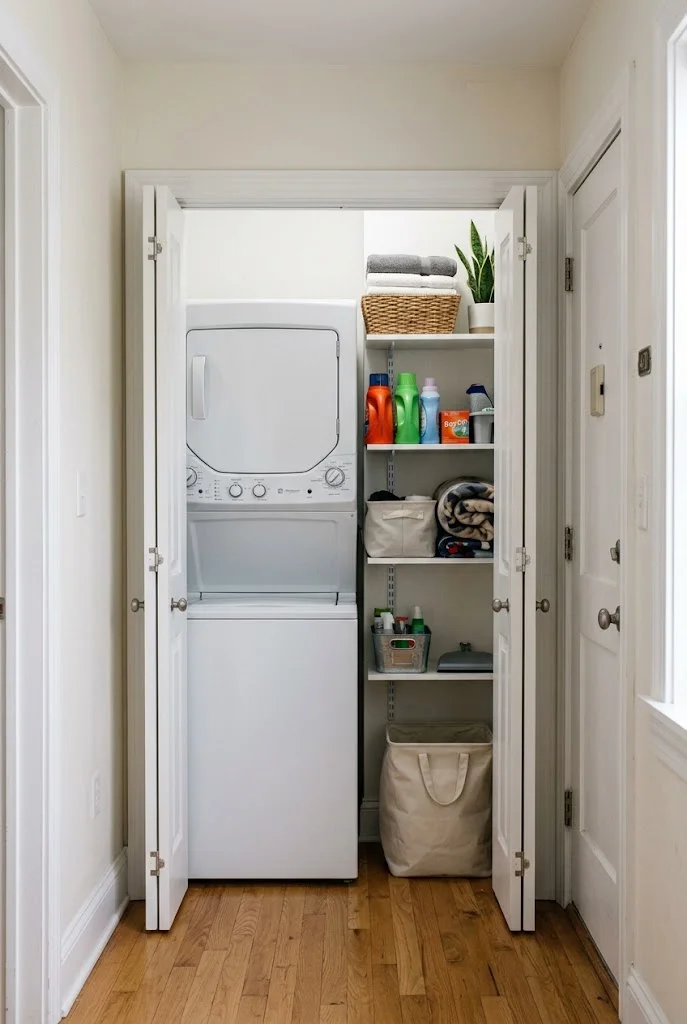
A laundry closet can make excellent use of an otherwise awkward section of a hallway, kitchen, bathroom, or mudroom. Stacking the washer and dryer vertically preserves valuable floor area and leaves room for a narrow shelf or cabinet.
Bi-fold or sliding doors can conceal the laundry zone when it’s not in use. Inside, use vertical storage and keep frequently used supplies within easy reach.
Make sure the appliances and surrounding installation have the appropriate ventilation, clearances, hookups, and access required for the specific models.
Choose a Light Paint Color
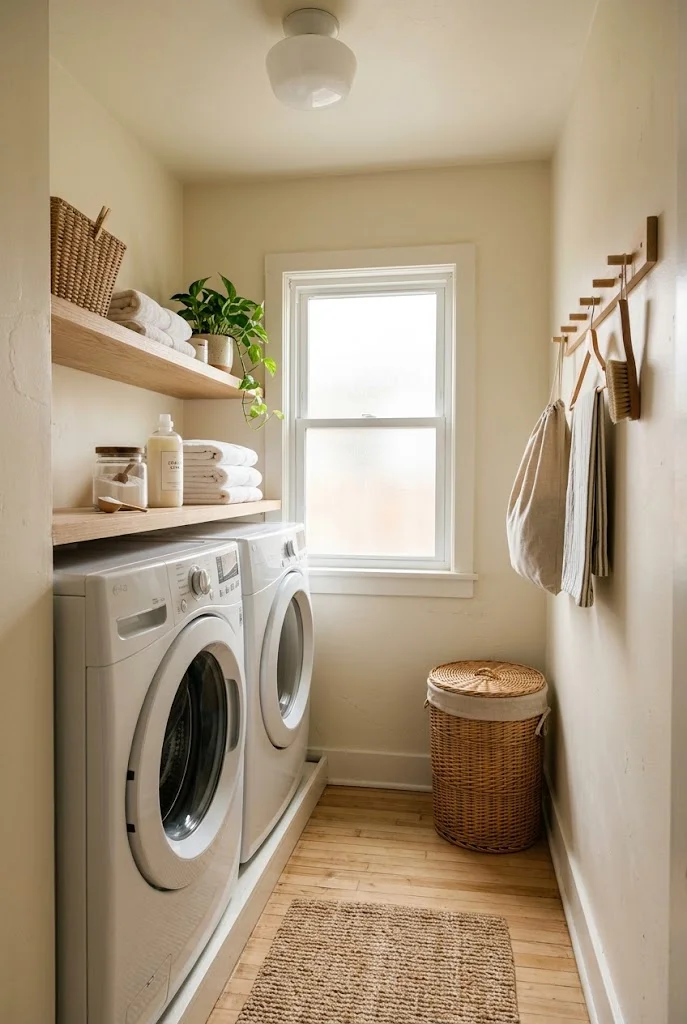
A pale wall color can make a compact laundry room feel brighter and more open. Soft white, warm ivory, pale gray, muted blue, and gentle sage are all options depending on the overall home palette.
The goal isn’t to make the room look larger through color alone. Instead, a lighter backdrop can reflect available light and create a cleaner visual field around appliances and storage.
Use one consistent wall color throughout the room when possible to avoid visually breaking up the limited space.
Turn the Wall Into a Folding Station
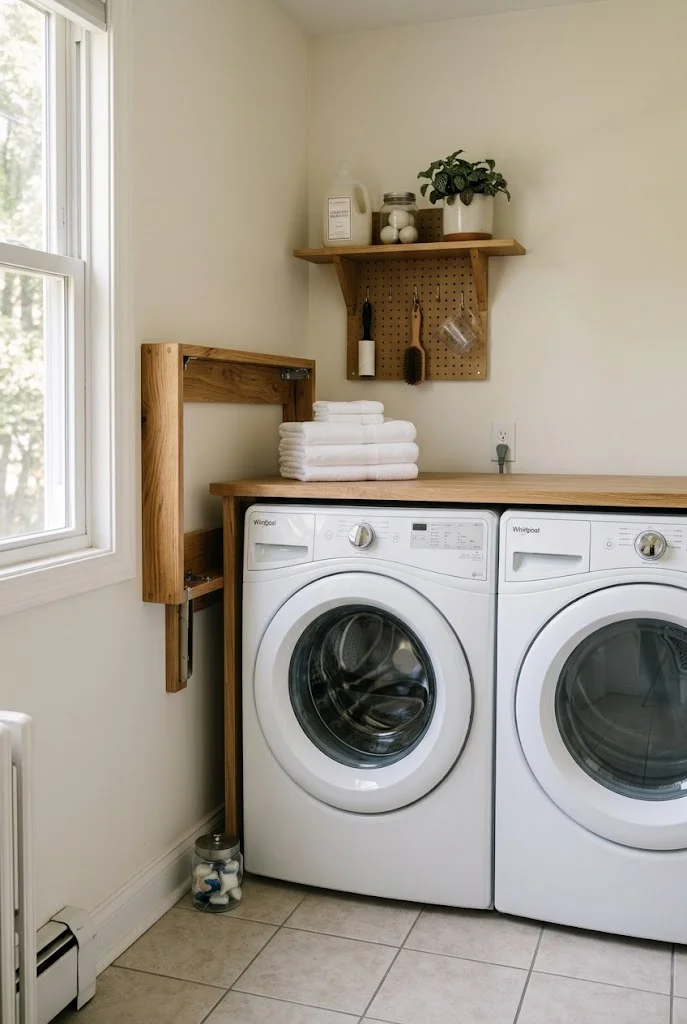
If there’s a small amount of uninterrupted wall space, a wall-mounted folding table can provide useful workspace without permanently occupying the floor.
A fold-down surface can remain open during laundry days and be folded against the wall when more clearance is needed. This approach works particularly well in laundry closets, narrow utility rooms, and multipurpose spaces.
Keep the surface depth appropriate to the room’s walkway and choose hardware designed for the intended load.
Use a Slim Rolling Laundry Cart

A rolling cart can fill a narrow gap beside appliances without requiring permanent cabinetry. Look for a design that fits comfortably into the available clearance while still being easy to pull out.
Use separate sections for detergent, stain-treatment supplies, clothespins, or cleaning accessories. Because the cart can move, it also makes it easier to access the wall or appliance area when needed.
This is one of the most approachable solutions for renters or anyone avoiding permanent remodeling.
Install a Wall-Mounted Drying Rack

A drying rack doesn’t need to consume valuable floor space. Wall-mounted versions can fold flat when not being used and open when delicate clothing needs to air-dry.
Position the rack where it won’t obstruct doors or the main walkway. If possible, place it near airflow or a suitable ventilation area so damp laundry doesn’t make the room feel crowded.
Create a Peg Rail for Everyday Tools

A simple peg rail can turn an unused strip of wall into accessible storage. Hang a small ironing board, dustpan, cleaning brush, or reusable laundry bag from sturdy hooks.
The advantage is visibility: frequently used items remain easy to grab without taking up cabinet or shelf space. Paint the rail to match the wall for a subtle effect, or use natural wood as a small visual accent.
Hide Supplies Inside Matching Baskets

Open storage becomes much calmer when loose items are grouped into coordinated baskets. Use baskets for extra cloths, reusable shopping bags, seasonal laundry supplies, or miscellaneous household items.
Choose two or three basket styles rather than collecting many different shapes and colors. Matching containers create visual repetition and make open shelving look intentional.
Stack the Washer and Dryer

For a particularly tight laundry room, stacking the washer and dryer can dramatically change how the available floor area is used. The freed-up footprint can accommodate a narrow cabinet, hamper, or utility shelf.
Use compatible appliances and an appropriate stacking system designed for those models. Keep frequently used supplies at reachable heights rather than placing everyday items above shoulder level.
Add a Narrow Utility Sink
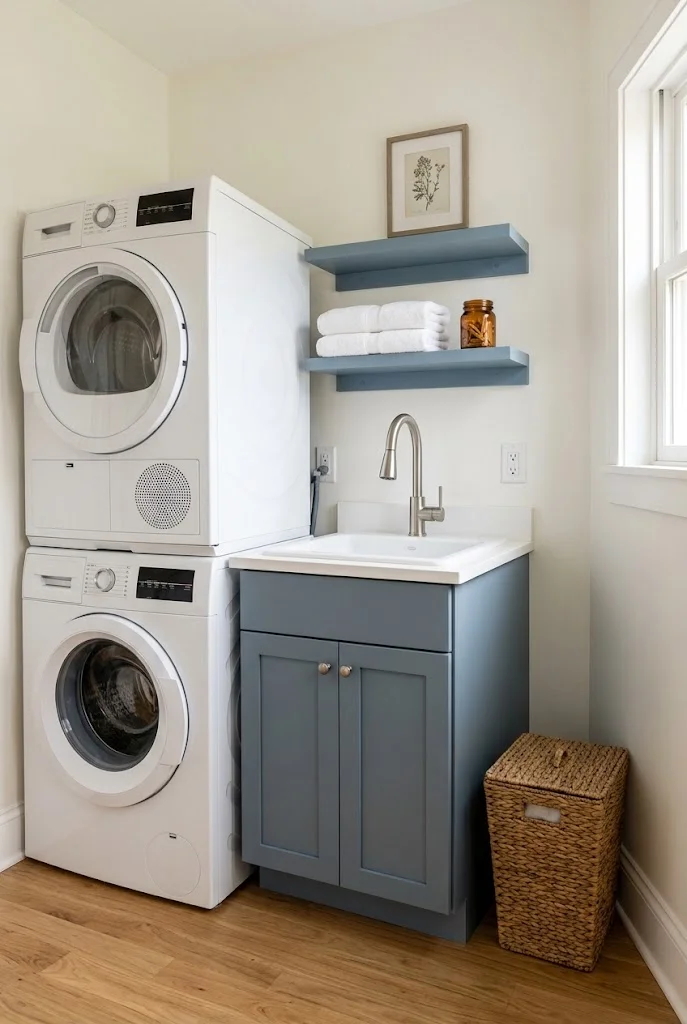
A compact utility sink can be useful when the laundry room has enough width for one. Choose a shallow, space-conscious model rather than allowing the sink cabinet to dominate the room.
Use the sink for practical laundry tasks and pair it with closed storage underneath for cleaning supplies. A simple faucet and durable countertop can keep the area functional without making it visually heavy.
Make Room for a Hidden Hamper

A hamper doesn’t have to sit visibly in the middle of the laundry room. A pull-out hamper inside a cabinet can keep dirty clothes contained while preserving a clean visual line.
For households with multiple laundry categories, consider separate removable bags or compartments. Keep the hamper positioned where clothes naturally enter the room so the system is convenient enough to maintain.
Use the Space Above the Door
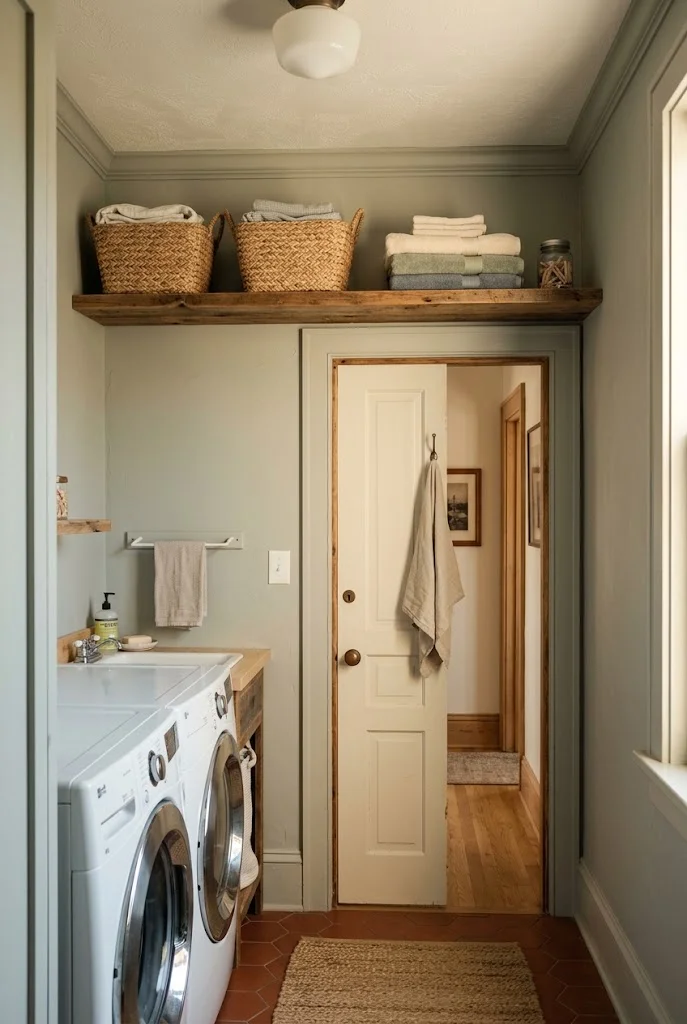
The wall area above a laundry-room door is often ignored, but it can accommodate a shallow shelf for items that aren’t needed every day.
Store extra detergent, seasonal linens, backup cleaning supplies, or empty storage containers there. Because the shelf is higher, use sturdy baskets to keep everything contained and avoid placing heavy items where they are difficult to retrieve safely.
Choose a Narrow Vertical Cabinet
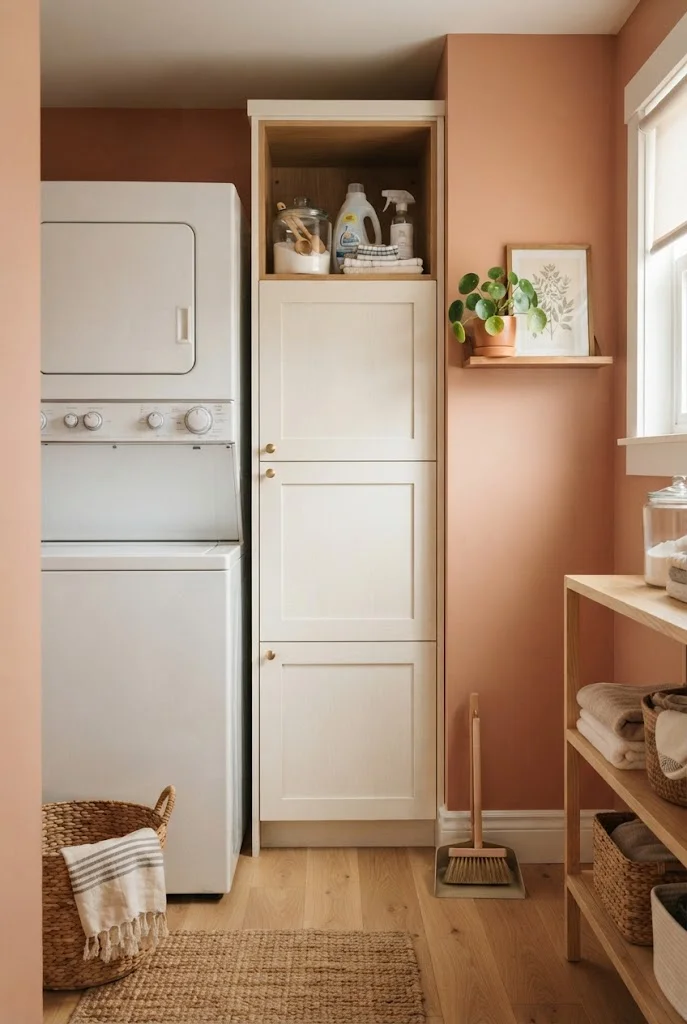
A narrow cabinet can provide surprisingly useful storage in a tight gap. Instead of trying to fit a standard-width cabinet, look for a tall unit designed around the available wall dimension.
Use adjustable shelves so the interior can accommodate bottles, brushes, towels, and other supplies of different heights.
Warm Up White Appliances With Wood Accents
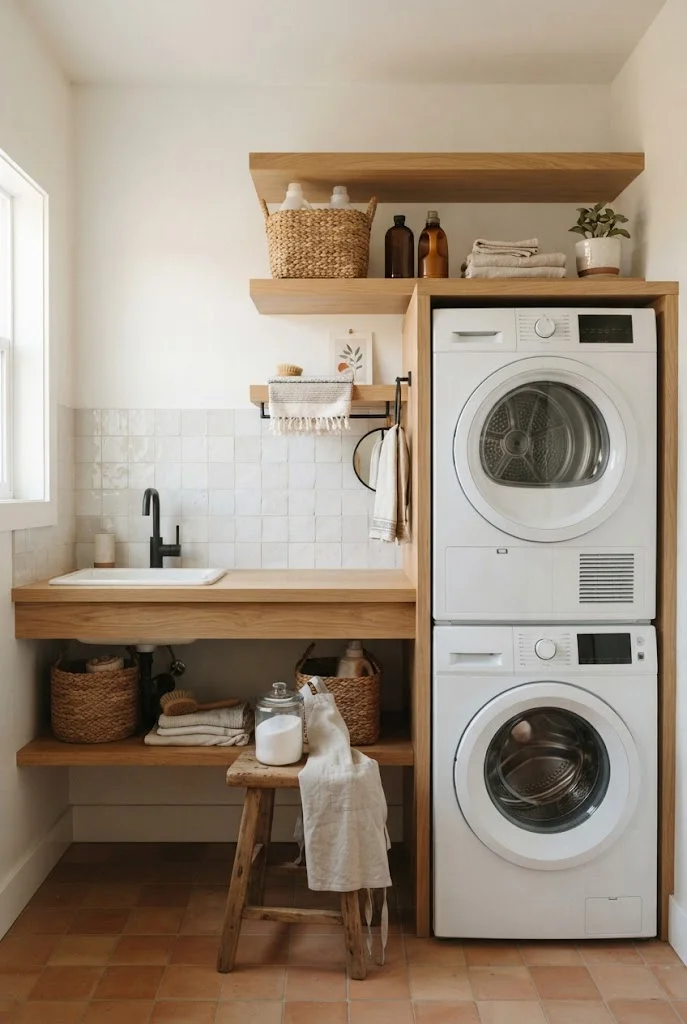
If your laundry appliances are white, natural wood can prevent the room from feeling overly clinical. A wood shelf, countertop, stool, or cabinet detail introduces warmth without requiring a complete redesign.
Keep the wood tone consistent across several small elements rather than adding too many unrelated finishes.
Try a Moody Color Palette

Small doesn’t automatically mean white. A deeper paint color can give a compact laundry room a cozy, intentional character.
Charcoal, deep green, muted navy, or another saturated shade can work especially well when balanced with good lighting and lighter cabinetry or countertops. The result can feel like a designed room rather than a purely functional utility zone.
Add a Slim Hanging Rod

A short hanging rod can be invaluable for clothing that needs to dry or hang immediately after coming out of the dryer.
Install it where it doesn’t interfere with doors, shelving, or ventilation. A rod beneath a shelf can create a particularly efficient combination: folded items go on the shelf while freshly laundered garments hang underneath.
Use a Wall-Mounted Ironing Board
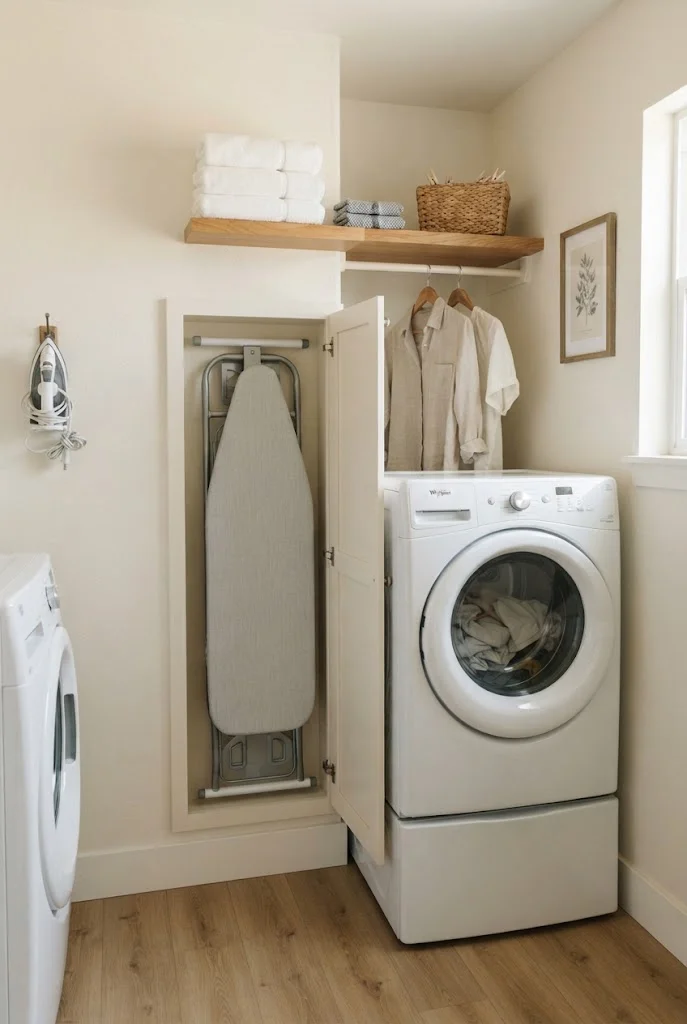
A traditional ironing board can consume too much floor space in a compact room. A wall-mounted or fold-away version keeps it accessible without creating another obstacle.
Mount it in a location with enough clearance to unfold it safely. When closed, the board becomes part of the wall rather than another piece of furniture competing for floor space.
Use Tile as a Small Focal Point

A small amount of tile can add personality without overwhelming the room. Consider a backsplash behind the washer and dryer or a tiled section behind a utility sink.
Subtle shapes such as vertical stacked tile, small squares, or understated patterns can provide texture while keeping the overall room cohesive.
Add a Simple Runner Rug
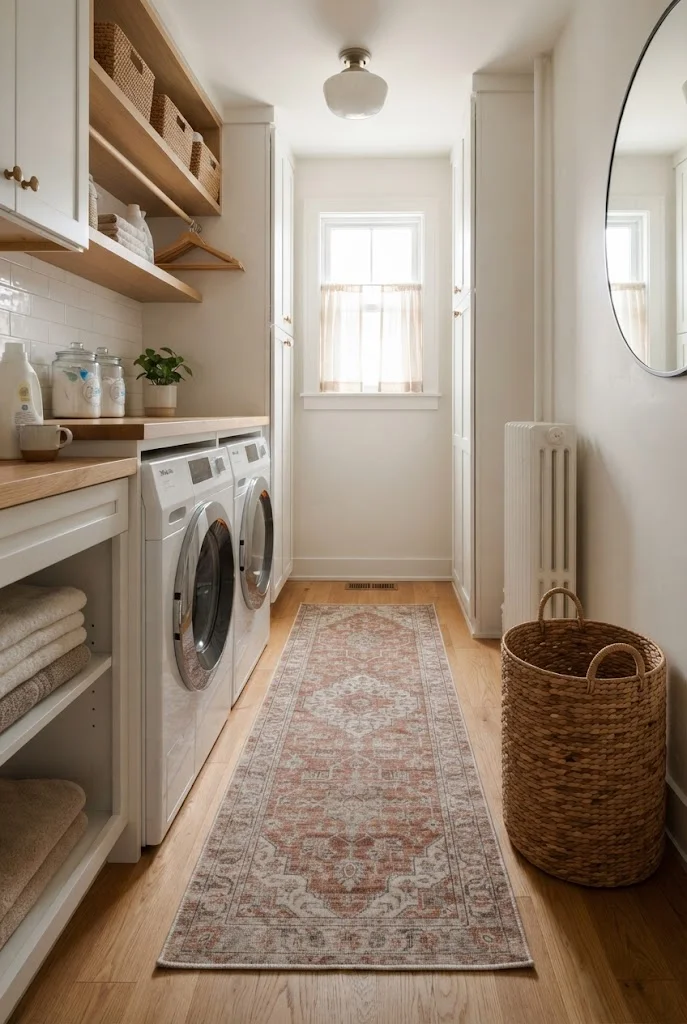
A washable runner can soften the hard surfaces commonly found in laundry rooms while adding a small dose of color or pattern.
Choose a rug that leaves enough clearance around appliances and doors. In a very narrow room, a low-profile runner can emphasize the length of the space without creating a tripping obstacle.
Install Under-Cabinet Lighting

If upper cabinets or shelves create shadows over the folding area, under-cabinet lighting can make the workspace easier to use while adding a finished appearance.
A warm or neutral light temperature can work well in a residential setting. Keep fixtures discreet so the lighting supports the room instead of becoming the main visual feature.
Turn an Awkward Corner Into Storage

An odd corner doesn’t need to remain empty. A narrow corner shelf, custom cabinet, or tiered storage unit can turn the awkward area into useful capacity.
Use the deepest part of the corner for less frequently accessed supplies while keeping daily-use items closer to the room’s main work zone.
Use Closed Cabinets for Visual Calm
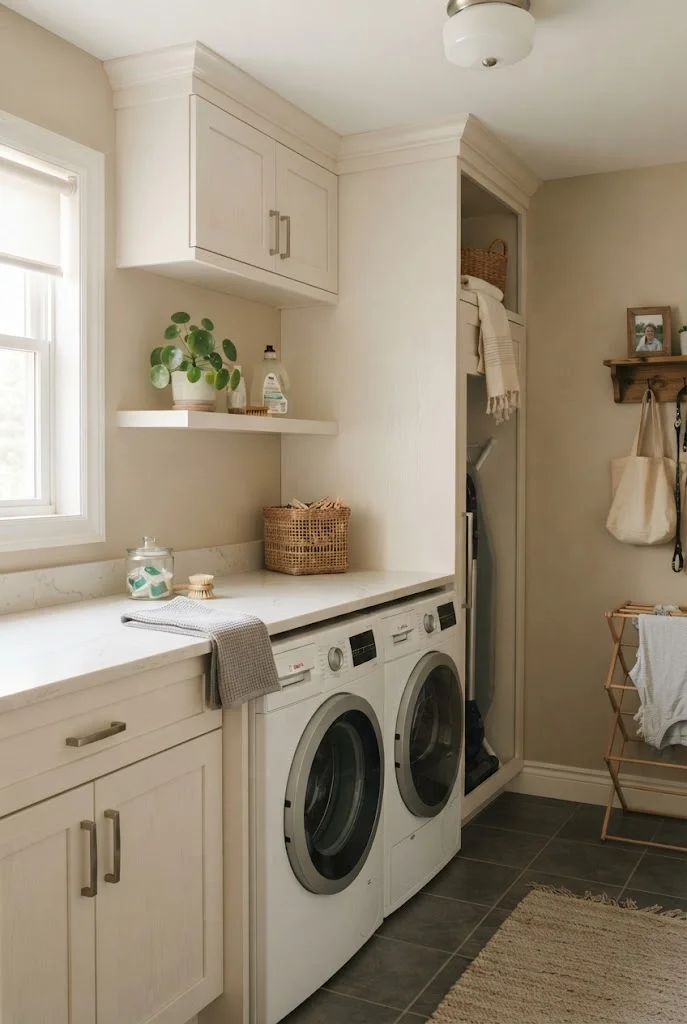
Open shelving is convenient, but closed cabinetry can be the better choice when the room contains many different supplies. Doors hide mismatched bottles and create a cleaner visual background.
For a small room, simple slab or shaker doors can look less visually busy than heavily detailed cabinetry. Add one open shelf or a glass-front section if you still want some display space.
Create a Laundry Zone Inside a Mudroom
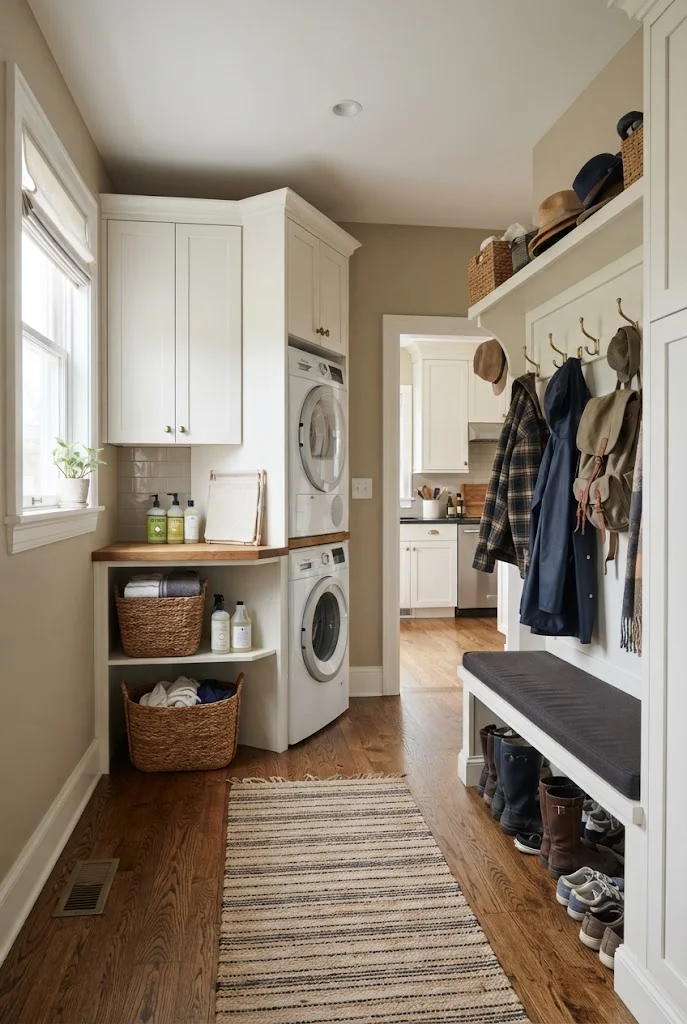
If the laundry machines share a mudroom, treat the laundry area as a defined zone rather than trying to make the whole room serve the same purpose.
A countertop, backsplash, dedicated shelves, or coordinated cabinetry can visually separate the laundry station from coats and shoes. This approach keeps the multifunctional room organized without adding unnecessary walls.
Add a Built-In Folding Counter With Drawers

For a more customized laundry room, a built-in counter with shallow drawers can combine workspace and storage in one footprint.
Use the drawers for small items such as dryer sheets, clothespins, stain-treatment tools, and reusable laundry accessories. Keeping these smaller supplies in drawers prevents the countertop from becoming another clutter zone.
Keep the Whole Room Visually Consistent
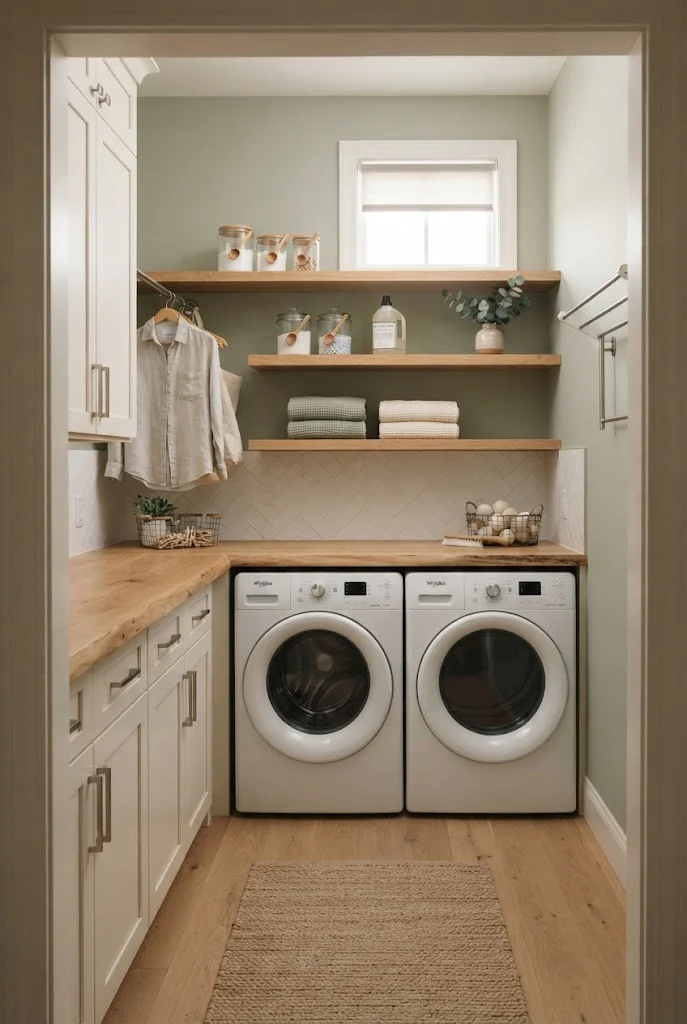
Sometimes the most effective small laundry room improvement is simply reducing visual noise. Choose a restrained palette, repeat a few materials, and avoid filling every shelf or wall.
For example, warm white cabinetry, one wood tone, a single metal finish, and a small accent color can create cohesion without making the room boring. Keep everyday products contained and leave some negative space around decorative pieces.
A compact room benefits from editing just as much as it benefits from storage. The goal is not to use every available inch simply because it’s there; it’s to make the space work smoothly while still feeling like part of the home.
How to Make a Small Laundry Room Feel More Organized
The best laundry room organization system is one that matches how the room is actually used. Start by identifying what currently creates the most friction. If detergent bottles are always scattered around, prioritize closed or contained storage. If clean clothes pile up, focus on creating a folding surface. If hanging garments are the problem, reserve wall space for a drying rod or fold-away rack.
Then work from the room’s existing footprint. Vertical storage, appliance stacking, fold-away surfaces, and narrow carts can all add function without requiring a larger room.
Finally, keep the visual scheme simple. A few coordinated materials will usually make a compact space feel more intentional than a collection of unrelated storage products.
Small Laundry Room Design Mistakes to Avoid
- Blocking the main walkway: Measure doors, appliance openings, and walking clearance before adding shelves or furniture.
- Overfilling open shelves: Storage should make the room easier to maintain, not create another surface that constantly needs tidying.
- Ignoring appliance requirements: Follow the installation, clearance, ventilation, and stacking requirements for the specific appliances.
- Using too many finishes: A limited material palette can make a compact room feel more cohesive.
- Putting everyday supplies too high: Reserve upper shelves for items used less frequently.
- Choosing storage that is too deep: A deep cabinet may technically add storage while making the room harder to move through.
- Decorating without considering function: Every addition should leave enough room for doors, baskets, folding, loading, and unloading.
Final Thoughts
A small laundry room can be both hardworking and attractive when its design starts with the available footprint. Instead of trying to squeeze everything into the room, identify the tasks that matter most and build storage around them.
A countertop may be the biggest improvement in one home, while a stacked appliance arrangement, tall cabinet, fold-away drying rack, or hidden hamper may make a greater difference in another. Even simple changes such as coordinated baskets, a fresh paint color, or better lighting can make the space feel more intentional.
Choose one or two improvements that solve your biggest everyday problem first. Once the practical layout works, the decorative details become much easier to get right.